One of the most interesting work opportunities I’ve had was with the Max Planck Institute for the Study of Religious and Ethnic Diversity in Göttingen, Germany. In this project, my role was to visualize the research of five anthropologists who conducted fieldwork in different regions around the world: Singapore, Brazil–England–United States, Cameroon, Tajikistan, and Timor-Leste.
The research theme was ageing and mobility, exploring how the phenomenon of ageing is experienced by individuals and communities in contexts of mobility—whether forced, such as in the case of war, or voluntary, through migration.
At the beginning, the team didn’t have a clear idea of what they wanted to produce, so I proposed creating a website that would include a blog, along with infographics that synthesize the research processes and key findings.
At the beginning of the project, we held a series of meetings in which the researchers presented their work. These meetings were very productive, but they didn’t provide enough detailed information for me to start brainstorming ideas for the visualizations.
As a next step, the anthropologists shared academic articles and papers they considered relevant, so I could read them and extract key information for the visual interpretation of their research.
Based on these readings, I created several mind maps that would later serve as the foundation for developing the visual projects. Here are 2 examples of the Mindmaps:
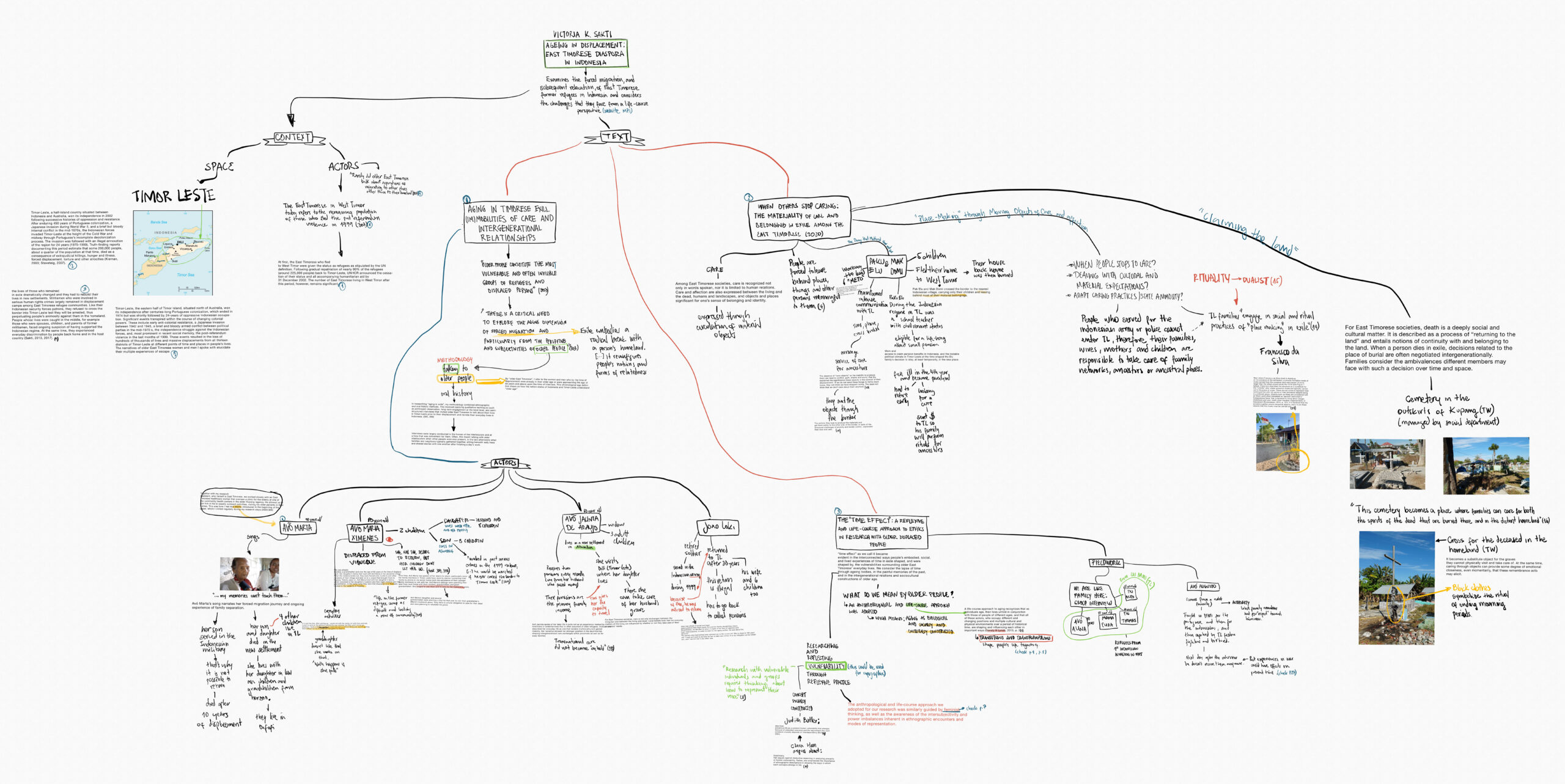

In later meetings with the researchers, we developed the content that would be published on the website. We carried out a curation of the audiovisual material, and I designed and built a website that included illustrations and interactive elements.
The website can be visited at: www.ageingandmobility.com
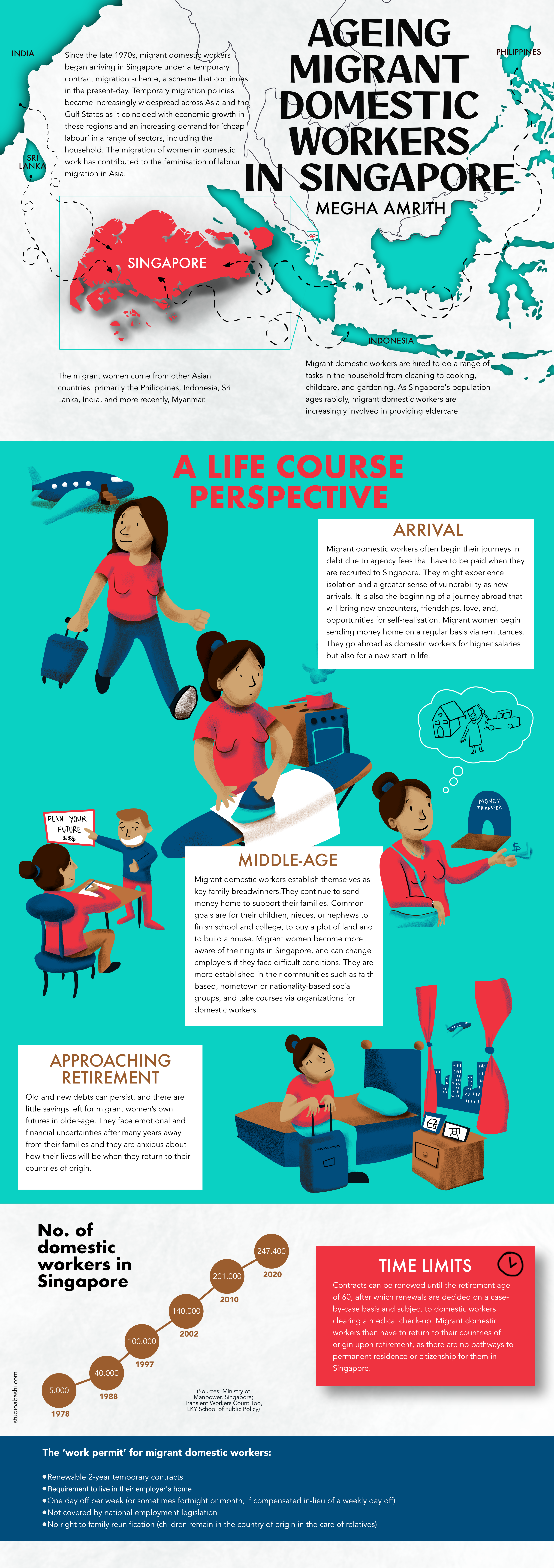
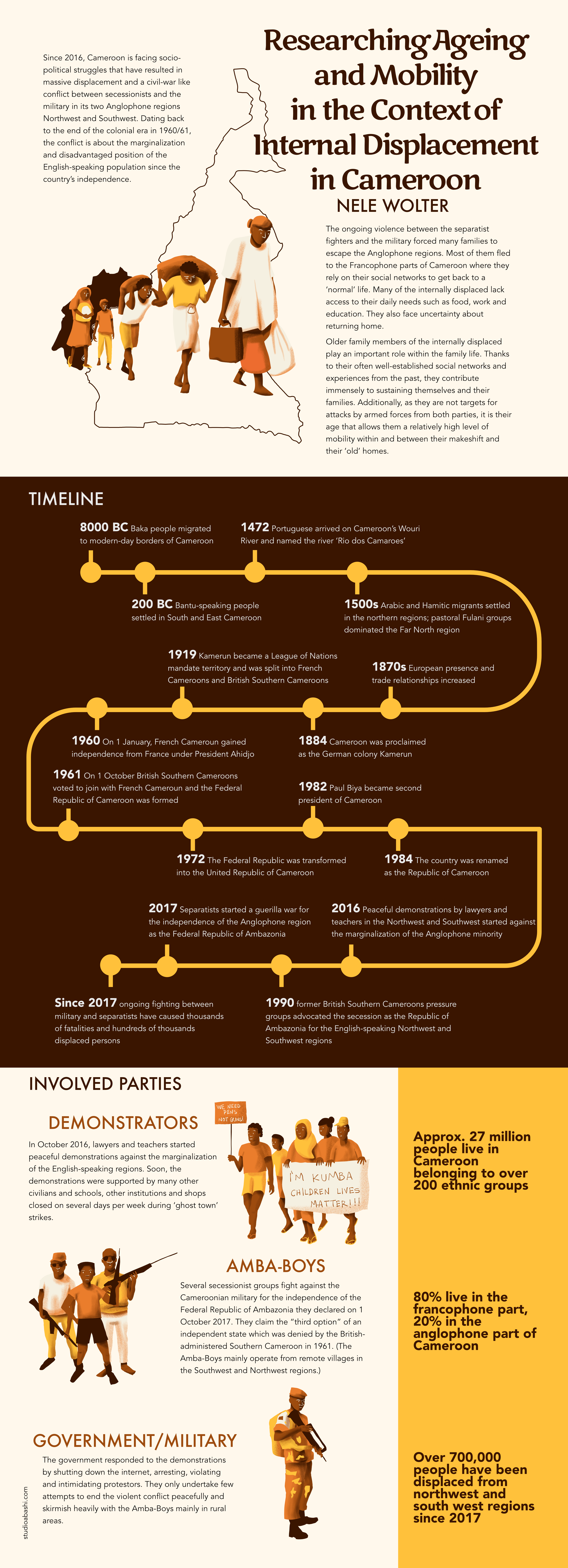
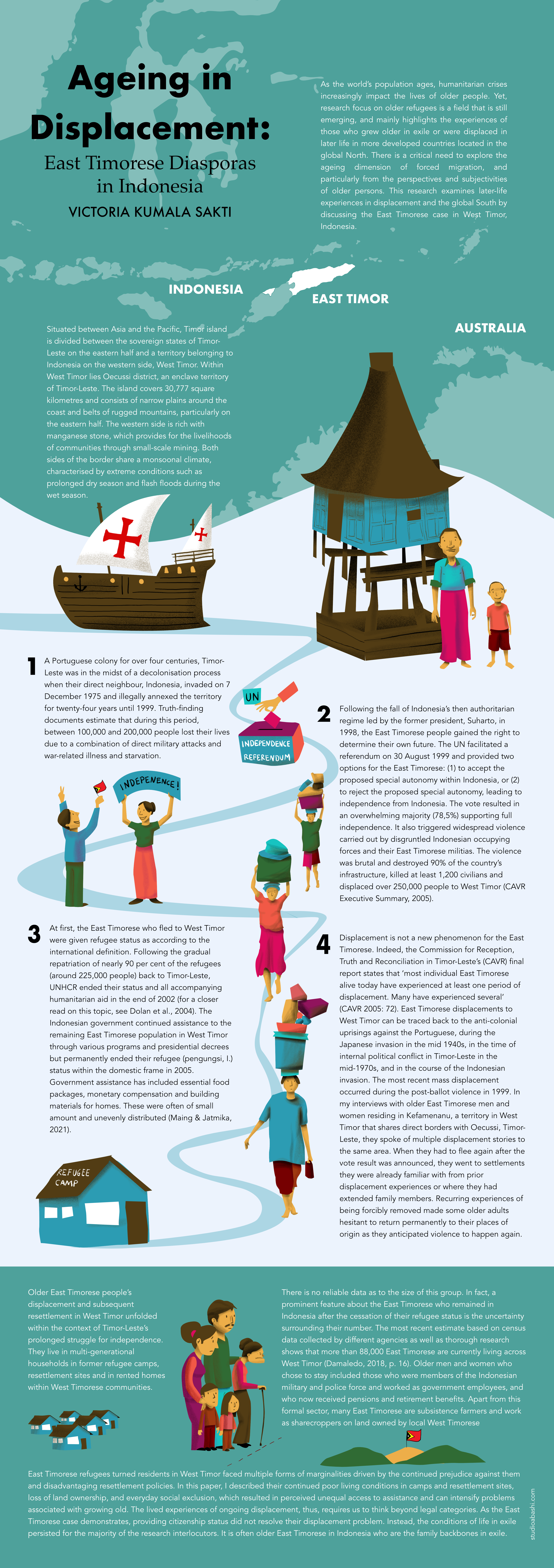
The project includes a total of 15 infographics, which can also be viewed on the website. Below are 4 selected examples:
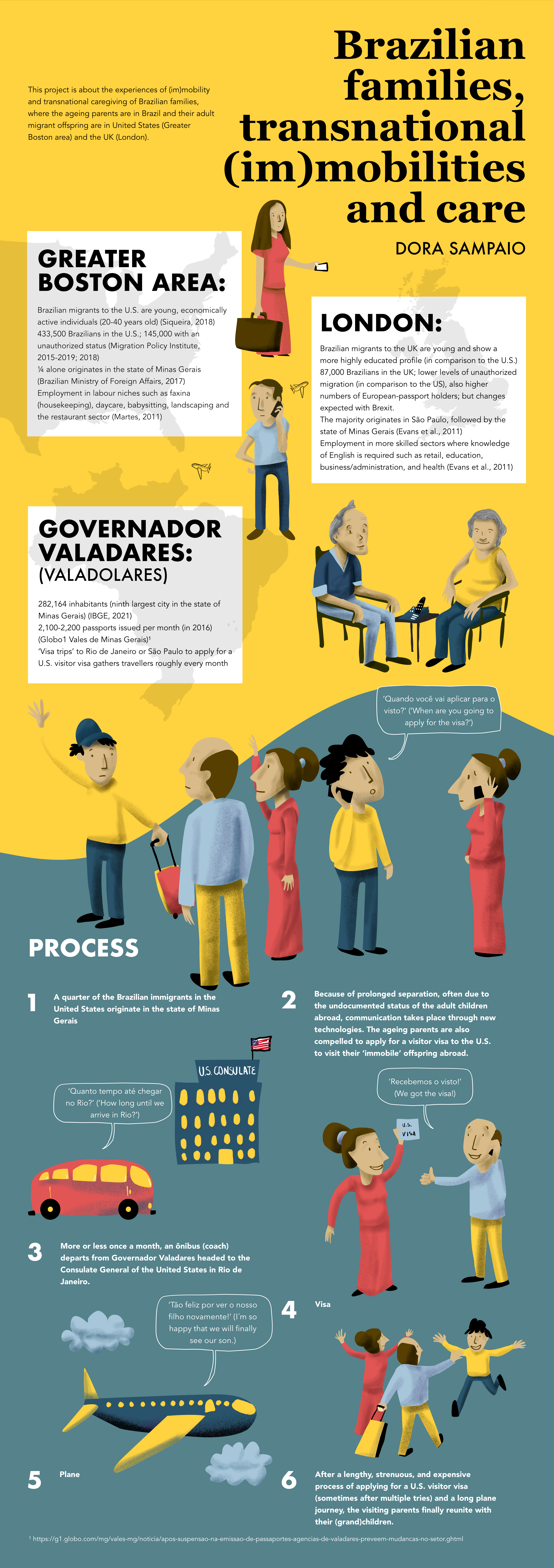
Process of elaboration of vectorial illustrations.

After the project was completed, we created a brochure that presented the work and the process behind visualizing anthropological research and translating it into graphic media.
We decided to do this mainly because there are very few references on how to approach this kind of work. We felt that sharing our experience could be valuable for others interested in communicating anthropological research through visual and graphic formats.


